The University of Dundee’s Comics Studies Creative Research Hub has partnered with a PhD student from the University of Aberdeen has come up with a creative way to educate the public and employers about the impacts of menopause – which could help more than 13 million women living with symptoms in the UK.
Professor Christopher Murray and postgraduate student, Chithramali Rodrigo, and a team of researchers from the University of Aberdeen, have worked with the charity Henpicked, and artists to design a comic to raise awareness of the realities of living with menopause and how it affects women in the workplace.
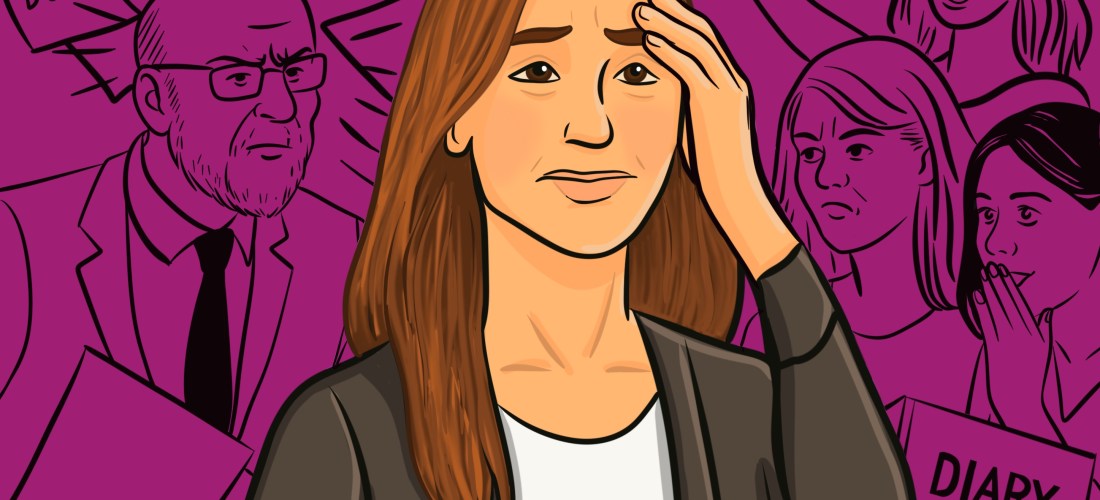
The comic, titled Navigating Menopause in the Workplace, was funded by Henpicked, an organisation supporting and advocating for those going through menopause. Written by Rodrigo and Professor Murray, with artwork by comics creators Katy Stone and Phillip Vaughan, the story follows the character of Melanie as she starts to experience menopause symptoms and follows her on her journey to diagnosis. It focuses on how menopause, and a lack of support, affects her at work.
At the start of the comic, Melanie doesn’t understand her symptoms or know what is causing them. Following diagnosis, she decides to raise awareness of menopause in her workplace, which leads to improved support, and a more open environment for conversations and addressing the misconceptions of her colleagues.
The comic also covers accommodations employers can implement to support those going through menopause including providing desk fans, adjusting working hours, taking shorter, more frequent breaks and making changes to uniforms.
Menopause occurs when your periods stop due to lower hormone levels. It typically begins between the ages of 45 and 55 but can happen earlier and is confirmed after 12 consecutive months without a period.
Common symptoms include hot flushes, difficulty sleeping, body aches, headaches, brain fog, vaginal dryness and low mood or mood swings. Symptoms can be debilitating for many women and can affect areas of life including work, relationships with family and friends, socialising, hobbies and more.
Many women may not feel comfortable speaking up about how menopause affects them or the types of support they need. It is hoped the comic will break down barriers, reduce stigma of menopause in the workplace and empower women to ask for the support they need. It also aims to highlight to employers their obligations to make their work environments more inclusive.
The creative and visual format provides the opportunity to convey medical information in a digestible and accessible way.
Linda Engels, Dr Jacqui Hutchison, Professor Louise Phillips and Dr Claire Robertson from the University of Aberdeen’s School of Psychology, Stuart Hall, Equality Diversity and inclusion partner at the University of Aberdeen, Deborah Garlick and Sally Leech from Henpicked, and Atiyah Kamran, Consultant Gynaecologist and Menopause Specialist at the Aberdeen Royal Infirmary, NHS Grampian, also made valued contributions to the production of the comic.
Chithramali Rodrigo said: “My PhD involves developing a toolkit to support women experiencing menopause at work. As part of this, I interviewed employed women going through menopause. They reported that both awareness of menopause and support measures to overcome its impact on work required significant improvements. They wished there was better awareness about menopause amongst all staff, including their line managers and colleagues. I thought a comic would serve this purpose very well.
“The main message of our comic is to convey the impact of menopause on work, how to find solutions and support those who are impacted by it.
“There are already health education materials widely available on menopause. However I wanted to use a more creative, accessible and user-friendly health education material in my toolkit.
“The comic’s target audience includes employed women experiencing menopause, their managers and colleagues at a workplace. By reading this comic the women experiencing menopause will gain awareness about the sources of support available to them and how and when to seek support.
“We hope managers and colleagues will learn about the impact menopause can have and how they can support someone through it. We hope the awareness will motivate them to become partners in creating a more inclusive workplace where everyone can thrive.”
The comic, published by UniVerse Comics and Henpicked, will be distributed to workplaces. It was funded through Henpicked’s Menopause and Menstruation Friendly Employer Awards as part of their commitment to support charities, research and education initiatives that break down barriers, start conversations and remove stigma.
Professor Christopher Murray, Chair of Comics Studies and Director of the Comics Studies Creative Research Hub (CSCRH) at the University of Dundee, was the co-writer of the comic. He has produced several educational and healthcare related comics.
He said: “The power of the comics medium is the combination of word and image. Comics have a universal appeal, but they’re often misunderstood in the Anglo-American context as just for children and limited to genres like humour or superheroes. In reality, comics are a sophisticated medium that can layer nuance and complexity into storytelling, making them particularly effective for capturing lived experience.
“Readers absorb this almost intuitively –comics pose questions, involve a degree of problem-solving, and inspire interaction and discussion. This is one reason why autobiographical and healthcare comics have been so successful and are so powerful and appropriate for a subject like menopause.
“It was a pleasure to bring together researchers at Aberdeen and experts at Henpicked with comics artists Katy Stone and Phillip Vaughan. Everyone did a fantastic job!”
Deborah Garlick, founder of Henpicked, said: “For over a decade, we’ve been on a mission to raise awareness of menopause and make sure those who need support can access it at work. We know people absorb information in different ways, and bringing lived experience and research together in a visual format like this makes the learning more immediate, relatable and memorable. We hope it helps build empathy, spark open conversations and support real, lasting change in workplaces.”
 Comics Studies Creative Research Hub